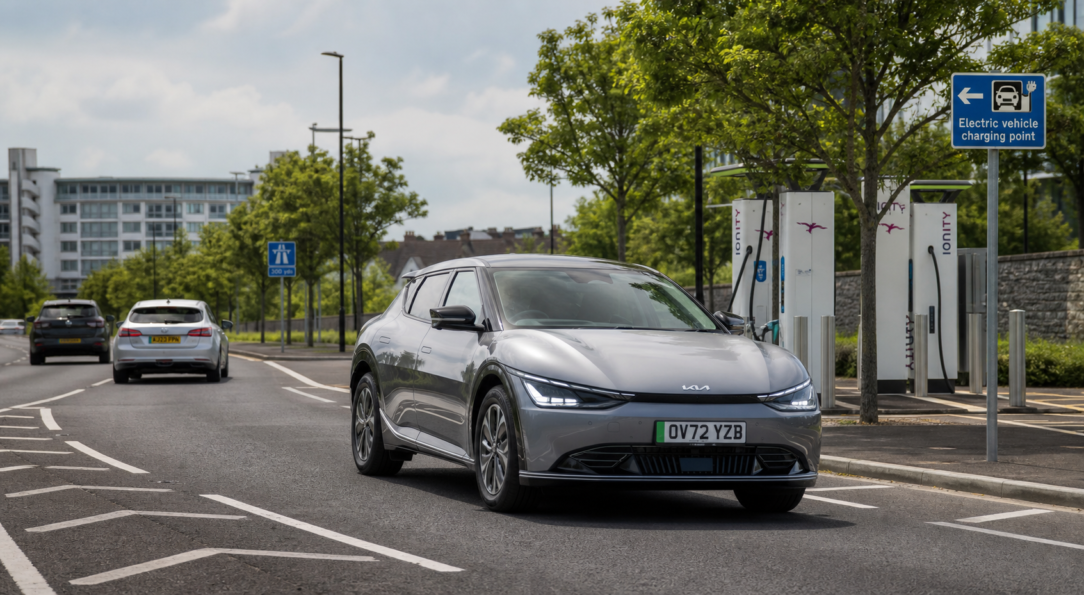
Two Million EVs on UK Roads: Progress, Reality and What It Means for Drivers
 By in
By in
The United Kingdom has reached a significant milestone in the shift towards electric mobility. In April 2026, the UK recorded its two millionth battery electric vehicle (EV) registered on its roads, a landmark number that reflects years of gradual adoption and industry change. At the same time, broader market dynamics show both progress and remaining challenges for drivers considering an electric car. This article explains what the two million figure means in practical terms, how the UK market is evolving, and what motorists should understand about the transition in 2026.
What Does “Two Million EVs Registered” Actually Mean?
The milestone refers to the cumulative total number of battery electric vehicles registered in the UK for the first time. Data from the industry body (SMMT) shows that in April 2026 the UK surpassed 2,000,000 registered electric cars on its roads. That growth came as new car registrations experienced a strong month and helped push the total over this threshold.
This figure includes only electric cars and does not count plug-in hybrids (PHEVs) or regular petrol and diesel models. It marks a continuation of a steady trend: the UK had already passed a million registered EVs in early 2024, and the second million arrived roughly two years later.
How Fast Are EVs Growing in the New Car Market?
New car registration figures show that electric cars are gaining share of the annual market. In April 2026 alone, nearly 40,000 new battery electric cars were registered — a year-on-year increase of about 59%. That meant EVs accounted for more than a quarter (26.2%) of all new car registrations that month.
When combined with plug-in hybrid and hybrid vehicles, more than half of all new cars sold in April were electrified, though the breakdown still favours battery electric cars as the fastest-growing segment within that group.
Across the year to date in 2026, electric cars make up a lower share of total registrations, reflecting variations in seasonal buying patterns, but growth remains consistent compared with previous years. This growth is notable, even if it still lags behind the government’s mandated targets for zero-emission vehicle sales.
Why Is This Milestone Not the Full Picture?
Two million sounds like a lot, but context matters. The UK has a total vehicle parc of around 40 million cars on the road. That means electric cars currently represent only a relatively small proportion — roughly 4–5% of all cars in use. This reflects the long turnover cycle of the vehicle fleet. Most cars stay in use for more than a decade before being scrapped.
In other words, while electric vehicle registrations are growing rapidly compared with a few years ago, the majority of cars on UK roads are still petrol or diesel. The pace at which the total fleet transitions will therefore be slower than the pace of new registrations alone.
What Is Driving EV Growth in the UK?
Several factors support the expansion of electric cars in the UK:
- Market recovery after tax changes: In 2025 higher vehicle taxes and the reintroduction of standard Vehicle Excise Duty on EVs temporarily weakened demand. Registrations rebounded in 2026 as buyers adjusted to the new tax environment.
- Increasing choice and competitive pricing: More models are available at a wider range of price points. In some cases, new EVs are on average cheaper at point of sale than new petrol cars, which helps boost appeal.
- Fleet and business demand: Company fleets and business buyers have shown strong uptake of electric and electrified cars, contributing significantly to overall registration figures.
- Charging infrastructure improvements: The number of public chargers and home charging availability has continued to grow, making EV ownership practical for more motorists.
These drivers vary by region and buyer type, but collectively they help explain the momentum behind EV registration figures.
What Challenges Still Slow Broader Adoption?
Despite strong growth, several factors temper the pace at which EVs are replacing older fossil-fuel vehicles:
- Total market share still below targets: The percentage of new car sales that are battery electric remains below the government’s Zero Emission Vehicle Mandate for 2026, which requires a higher share. This means manufacturers and dealers must still adjust strategies to hit compliance targets.
- Cost considerations: While new EV prices have become more competitive, upfront costs remain higher than many used petrol or diesel alternatives for some buyers.
- Charging access inequality: Drivers without off-street home charging continue to rely heavily on public infrastructure, which varies widely in availability and reliability across the UK.
- Residual value concerns: Some buyers worry about the resale value of electric cars, particularly older models with reduced range compared with newer vehicles.
These practical considerations influence buyer decisions alongside headline registration numbers.
How Does This Affect Petrol and Diesel Cars?
The growing share of EV registrations does not immediately remove petrol and diesel vehicles from UK roads. Most motorists still drive traditional internal combustion engine cars, and many models remain in production and on sale. However, shifting sales patterns signal a structural change: petrol car registrations continue to contract relative to electric and hybrid options, and diesel models account for only a small portion of new registrations.
For motorists thinking about their next car purchase, the balance between upfront cost, running cost, charging access and long-term value remains central to decision-making. The rising presence of electric options gives buyers more choice but does not compel every driver to switch immediately.
Used Electric Cars and the Broader Ownership Landscape
As more new electric cars enter the market, the used EV segment is also beginning to grow. Increased choice and earlier models filtering down into second-hand stock make electric ownership more accessible to drivers who are not ready to buy new. Some used EV prices have fallen closer to parity with petrol equivalents, encouraging broader adoption. This trend also affects how motorists view value and ownership costs over time, particularly for those who prioritise lower monthly outlays over new-car premiums.
What This Means for UK Motorists in 2026
The two million EV milestone reflects real growth but should be seen as part of an ongoing transition rather than an endpoint. For drivers considering their next vehicle:
- Electric cars are now a mainstream option with substantial volume and brand availability.
- Charging infrastructure is improving but still uneven outside urban and suburban areas.
- EV ownership economics are increasingly competitive, especially when factoring in lower running and maintenance costs.
- Petrol and hybrid alternatives remain viable for many usage patterns, particularly for those without home charging or for frequent long-distance travel.
The UK EV market in 2026 is defined by expansion, choice and practical considerations rather than a single shift. Drivers benefit from a wider range of options but still need to weigh their personal needs carefully when choosing between petrol, hybrid and electric vehicles.