Are Robotaxis Coming to the UK Sooner Than We Think?
 By in
By in
Driverless robotaxi services — vehicles that operate without a human driver — have been hyped for years as part of the future of urban mobility. Recently, developments in technology, regulation, and commercial partnerships have brought robotaxis closer to reality in the United Kingdom.
This article explains where robotaxi technology currently stands in the UK, what trials and services are being planned, what regulatory frameworks are required, and how this will affect British motorists and the wider transport landscape.
What Is a Robotaxi?
A robotaxi is a vehicle designed to carry passengers without a human driver. It uses a range of sensors, software and artificial intelligence to perceive its surroundings, make decisions and navigate public roads.
Robotaxis are generally associated with “Level 4” or “Level 5” autonomous driving, where the vehicle can operate without a human in many or all conditions. This is different from “Level 2” driver assistance features such as adaptive cruise control or lane?centering, which still require the driver to supervise the vehicle’s behaviour.
Is the UK Preparing for Robotaxis?
Yes. The UK government and transport authorities have been actively working on frameworks and pilot projects to enable self?driving vehicles, including robotaxis, to operate legally on British roads.
Plans for regulatory updates suggest that new laws will be put in place in the second half of 2026 to allow robotaxi operations once safety standards are met. The framework is intended to ensure strict compliance with safety, cybersecurity and oversight requirements before commercial deployment can begin. :contentReference[oaicite:0]{index=0}
Which Companies Are Involved?
Several established and emerging companies are positioning themselves to launch robotaxi services in the UK. The major players include:
- Alphabet’s autonomous vehicle unit, Waymo, which has publicly stated its intention to launch a robotaxi service in London by late 2026, subject to regulatory approval. :contentReference[oaicite:1]{index=1}
- Wayve, a UK?based autonomous vehicle technology company, which has secured significant funding from global investors and partnered with Uber for commercial trials and future operations. :contentReference[oaicite:2]{index=2}
- Chinese technology firms (for example, Baidu) that may participate in collaboration with ride?hailing platforms such as Uber or Lyft under pilot schemes. :contentReference[oaicite:3]{index=3}
These partnerships reflect a mix of international and domestic expertise, combining deep learning software, sensor fusion systems and ride?hailing platforms to create potential robotaxi services in urban environments.
What Are the Latest Developments in London?
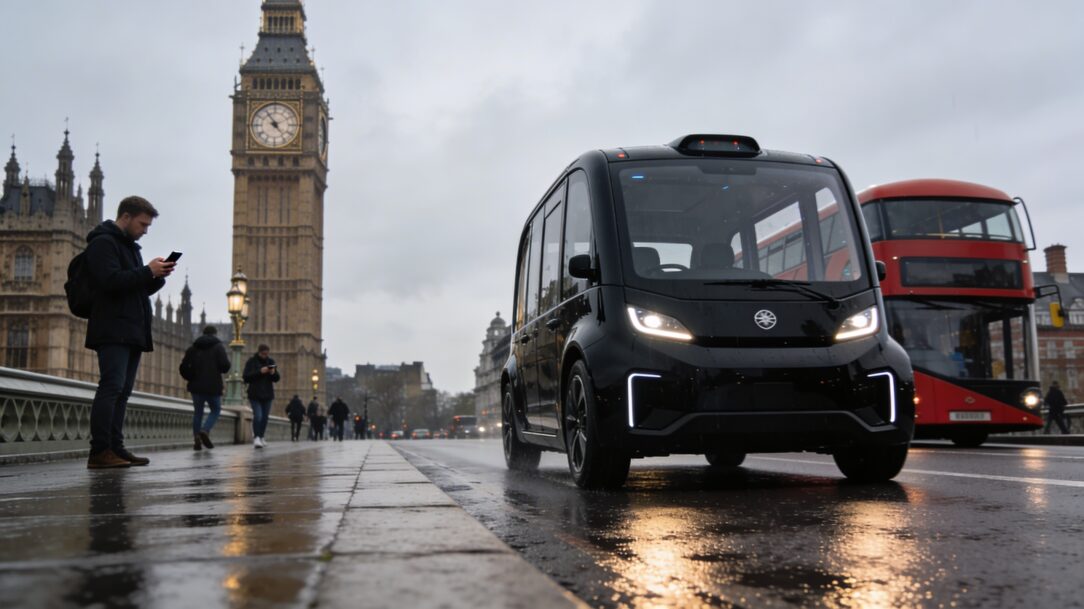
London is emerging as a recognised test bed for robotaxi technology. Several pilot programmes and test runs have been taking place with human supervisors behind the wheel to map streets, collect data and adjust systems to the unique challenges posed by the capital’s traffic conditions. :contentReference[oaicite:4]{index=4}
Public?facing trails involving vehicles developed by Wayve and other partners have been observed navigating central and outer London streets, responding to complex traffic, cyclists, junctions and pedestrian behaviour. :contentReference[oaicite:5]{index=5}
Transport authorities are working with companies to integrate these pilots into broader autonomous vehicle policy developments. This includes ensuring safety standards, data protection measures and vehicle compliance are finalised before fully driverless services can operate without a human present. :contentReference[oaicite:6]{index=6}
When Might Robotaxi Services Begin?
Current signals from companies and regulators suggest the following timeline possibilities:
- Short?term (2026): Extended pilot projects and supervised operations with safety drivers are likely, especially in controlled zones of London. :contentReference[oaicite:7]{index=7}
- Mid?term (Late 2026): Commercial robotaxi services could start operating in limited areas, subject to approval of updated self?driving vehicle regulations. :contentReference[oaicite:8]{index=8}
- Longer?term (2027 and beyond): Wider rollout in more areas of the UK with further regulatory maturity and public acceptance. :contentReference[oaicite:9]{index=9}
These timelines are not fixed. They depend on regulatory progress, real?world performance during trials, and public acceptance of autonomous systems.
What Are the Regulatory and Safety Considerations?
The UK government views autonomous vehicles as a potential economic growth area, estimating that the sector could contribute significant value and job creation in the coming decade. :contentReference[oaicite:10]{index=10}
However, careful oversight is central to any deployment. Key regulatory and safety considerations include:
- Performance standards for perception, decision?making and fail?safe behaviour.
- Cybersecurity requirements to reduce the risk of hacking or software manipulation.
- Liability and insurance frameworks for when vehicles operate without a driver on board.
- Public communication and transparency to build trust in autonomous systems.
Regulators must balance innovation with road safety. Until the regulatory framework is fully in place and proven safe, robotaxi services will operate under conditional or supervised trials rather than unrestricted commercial operation. :contentReference[oaicite:11]{index=11}
How Do Robotaxi Trials Work in Practice?
During trials, vehicles operate with a trained human supervisor who can intervene if necessary. This approach allows developers to test and refine algorithms in complex urban settings without exposing the public to unassessed risk.
Data from these early tests is used to improve the perception stack, routing decisions, prediction models for other road users, and interaction with real?world traffic features such as cyclists, pedestrians and unusual road layouts. :contentReference[oaicite:12]{index=12}
Testing in London is particularly challenging because the road network is old, congested and contains diverse traffic behaviours. Lessons learned here will influence future expansion plans across the UK.
What Are the Main Challenges for Robotaxi Rollout?
Despite progress, several barriers remain before robotaxis become a familiar sight on UK streets:
Technology Adaptation
Autonomous systems must operate reliably in all weather conditions and recognise unpredictable behaviour from other road users. Complex junctions, narrow streets and mixed traffic present challenges that differ from simpler urban layouts used in some early pilot cities.
Regulation and Liability
A clear legal framework is required for vehicles to operate without drivers. This includes rules on responsibility when an autonomous system is in control and how liability is allocated after an incident.
Public Trust and Acceptance
Scepticism exists about whether robotaxis can match the experience and intuition of human drivers, particularly in a city like London where local knowledge and nuanced navigation are prized. Some professional drivers have publicly questioned the technology’s readiness. :contentReference[oaicite:13]{index=13}
Economic Viability
Robotaxi services must compete with traditional taxi services, public transport, and ride?hailing with drivers. Pricing, service coverage and practical utility will determine customer uptake.
What Could Robotaxis Mean for UK Drivers?
If robotaxi services become established, they could change mobility patterns rather than replace private car ownership overnight. Potential impacts include:
- Alternative transport options in major cities, especially where parking is expensive or limited.
- Access to mobility for people unable to drive or without a licence.
- Supplementary services to public transport in underserved areas.
- Potential pressure on traditional taxi and private hire industries.
However, private car ownership is unlikely to disappear solely because robotaxis exist. Personal preferences, journey needs and other transport factors will continue to influence choices.
How Should British Motorists Think About Robotaxis?
For most drivers, robotaxis represent a long?term change in urban mobility rather than an immediate disruption. Understanding current developments helps frame expectations:
- Robotaxi pilots are happening now and will likely expand through 2026 and 2027.
- Full commercial services are tied closely to regulatory frameworks and safety validation.
- Motorists should view robotaxis as an additional option rather than an imminent replacement for private driving.
- Developments in London will shape expectations for rollout elsewhere in the UK.
Robotaxis Are Nearer Than They Once Were
After years of speculation, robotaxis are closer to operating on British roads than they have ever been. The combination of regulatory progress, commercial investment and real?world testing suggests that limited services could launch within this year or early next, at least in controlled urban areas such as London. :contentReference[oaicite:14]{index=14}
This does not mean robotaxis will immediately become widespread or replace traditional taxis and private cars. Instead, they are likely to roll out gradually, starting with pilot zones and growing as confidence, regulation and technology evolve.
For UK drivers, this is a change worth watching, but not a change that requires rapid decisions about private car ownership or licencing in 2026.