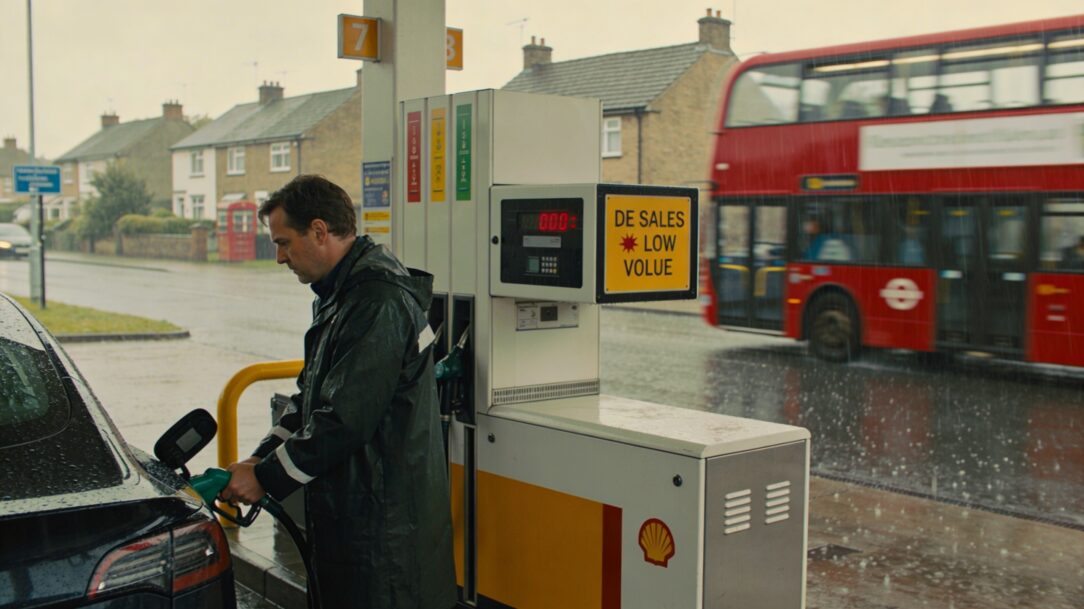
UK Car Market 2026: Why Petrol Sales Are Falling and What It Means for British Drivers
 By in
By in
The UK car market is changing at a steady but visible pace. Petrol cars still dominate the road, but their share of new registrations is falling. Hybrid and electric vehicles are gaining ground. Manufacturers are adjusting production plans. Government policy is shaping what dealers can sell. Drivers are trying to decide what makes sense for the next five to ten years.
This article explains why petrol sales are declining in the UK, how the Zero Emission Vehicle (ZEV) mandate works in practice, and what these changes mean for motorists making buying decisions in 2026.
What Is Happening to Petrol Car Sales in the UK?
Petrol cars remain widely available, but their share of new car registrations has been shrinking year by year. Battery electric vehicles (BEVs) and hybrids now account for a growing proportion of new sales. Plug-in hybrid (PHEV) demand has also strengthened after several years of slower growth.
Several patterns are clear:
- Battery electric vehicle registrations continue to rise year on year.
- Hybrid models are attracting buyers who want lower fuel use without committing to full electric.
- Pure petrol models are losing market share, particularly in urban areas.
- Diesel remains a smaller but stable niche, mainly for high-mileage motorway drivers.
This does not mean petrol cars are disappearing. It means they are no longer the default choice for new buyers.
Why Are Petrol Sales Falling?
The decline is not caused by one single factor. It is the result of regulation, economics, manufacturer strategy, and buyer uncertainty working together.
1. The Zero Emission Vehicle (ZEV) Mandate
The UK’s ZEV mandate requires manufacturers to sell a minimum percentage of zero-emission vehicles each year. If they fail to meet the target, they face financial penalties.
This policy changes behaviour in several ways:
- Manufacturers prioritise electric vehicle supply to the UK market.
- Dealers receive stronger incentives to sell EVs.
- Petrol models may receive fewer updates or less marketing support.
As the required EV percentage increases annually, the pressure on petrol sales naturally grows.
2. The 2035 Ban on New Petrol and Diesel Cars
The UK plans to end the sale of new purely petrol and diesel cars in 2035. Hybrids are expected to continue for a limited period beyond that date, subject to emissions criteria.
Although 2035 may seem distant, car buyers often think about resale value. A vehicle bought in 2026 may still be on the road in 2034. That affects confidence in long-term ownership.
3. Fuel Costs and Running Costs
Petrol prices in the UK remain volatile. Electricity prices have also fluctuated, but for many drivers with home charging, EV running costs remain lower per mile.
Key cost differences include:
- Fuel vs electricity cost per mile
- Vehicle Excise Duty (VED) changes for EVs and hybrids
- Maintenance differences (fewer moving parts in EVs)
- Company car tax advantages for electric vehicles
For high-mileage drivers with off-street parking, the financial case for electric is often straightforward. For others, the calculation is more balanced.
4. Clean Air Zones and Urban Policy
Urban policy has also influenced buying decisions. Clean Air Zones (CAZ) and Ultra Low Emission Zones (ULEZ), such as the one in London, apply charges to higher-emission vehicles.
Even drivers who rarely enter central London are aware of the direction of travel. The expectation of stricter urban rules influences new car choices.
5. Manufacturer Strategy and Model Availability
Many manufacturers are investing heavily in electric platforms. As a result:
- Some petrol models are no longer being replaced at end of life.
- Electric equivalents are launched first.
- Marketing budgets shift towards EV line-ups.
When fewer new petrol models enter the market, consumer choice narrows, which naturally reduces sales.
Are Hybrids Replacing Petrol Cars?
In many cases, yes.
Hybrid vehicles now serve as a transition option for drivers who are not ready for full electric. There are three main types in the UK market:
- Self-charging hybrids (HEVs)
- Plug-in hybrids (PHEVs)
- Mild hybrids (MHEVs)
Self-charging hybrids are popular for urban and mixed driving. Plug-in hybrids suit drivers who can charge regularly but still need petrol for longer trips. Mild hybrids mainly improve efficiency without offering electric-only driving.
For buyers concerned about charging infrastructure or battery longevity, hybrids offer familiarity with reduced fuel consumption.
What Does This Mean for Used Petrol Car Values?
Falling new petrol sales do not automatically mean collapsing used values. The used market operates differently.
Important factors include:
- Supply of nearly new petrol cars
- Demand in rural areas with limited charging
- Affordability of used EVs
- Battery warranty confidence
In practice, used petrol cars remain in strong demand in many parts of the UK, particularly where off-street parking is limited. However, long-term value stability may weaken if EV adoption accelerates further.
Should You Still Buy a Petrol Car in 2026?
The answer depends on usage, location, and ownership horizon.
Petrol May Still Make Sense If:
- You drive long motorway distances weekly.
- You cannot install home charging.
- You keep cars for fewer than five years.
- You prioritise lower upfront purchase price.
Electric May Make More Sense If:
- You have driveway charging access.
- You drive predictable daily mileage.
- You plan to keep the vehicle long term.
- You are a company car driver benefiting from lower Benefit-in-Kind tax.
Hybrid suits drivers in between those categories.
How Is Charging Infrastructure Affecting the Shift?
Public charging infrastructure in the UK continues to expand, but coverage varies significantly by region.
Urban areas and major motorway corridors now offer rapid and ultra-rapid charging. Rural areas remain less consistent. Reliability and pricing transparency also vary between networks.
For drivers without home charging, public charging cost per mile can approach petrol costs. That weakens the economic case for some households.
Infrastructure development remains one of the most practical constraints on faster petrol decline.
What About Vehicle Excise Duty (Road Tax) Changes?
From April 2025, electric vehicles began paying standard Vehicle Excise Duty after the first year, removing their previous exemption. Expensive car supplements also apply to higher-priced EVs.
This narrows the cost gap slightly between petrol and electric ownership. However, the overall tax structure still favours low-emission vehicles over higher-emission petrol models.
Are Manufacturers Quietly Phasing Out Petrol?
Some are. Others are taking a slower approach.
Several global brands have announced timelines to transition largely to electric line-ups in Europe during the 2030s. In practice, this means:
- Fewer new petrol-only platforms.
- Shorter development cycles for combustion engines.
- More shared EV architectures across brands.
However, demand still exists, and manufacturers respond to profit signals. As long as petrol vehicles sell in meaningful numbers, they will remain available.
Is the EV Transition Slowing Down?
Growth rates have moderated compared with early rapid expansion years. Some buyers are cautious due to charging concerns, electricity prices, and higher list prices.
However, moderation is not reversal. EV adoption continues to rise in absolute terms. The pace is becoming more gradual rather than exponential.
This steadier growth partly explains why hybrids are currently gaining strong ground.
How Does the UK Compare to Europe?
The UK is broadly aligned with European trends, though national policies differ.
Countries with strong purchase incentives and dense charging networks have seen faster EV adoption. Others rely more heavily on hybrids.
The UK’s regulatory framework, particularly the ZEV mandate, places it among the more structured transition markets rather than a purely incentive-driven one.
What Are the Main Misconceptions About Petrol’s Decline?
“Petrol Cars Will Become Illegal Overnight”
The 2035 rule affects new sales, not existing vehicles. Owners can continue driving petrol cars beyond that date.
“Used Petrol Cars Will Be Worthless”
Residual values depend on supply and demand. In areas with limited charging, petrol demand remains stable.
“EVs Are Always Cheaper to Run”
This depends heavily on access to low-cost home charging. Public rapid charging can reduce or remove cost advantages.
What Should UK Drivers Consider Before Choosing?
Practical decision factors include:
- Annual mileage
- Access to home charging
- Length of ownership
- Urban vs rural driving patterns
- Resale expectations
- Insurance differences
Short ownership cycles reduce long-term policy risk. Long-term ownership increases exposure to regulatory shifts and resale uncertainty.
Is This the Beginning of the End for Petrol?
Petrol’s share of new sales will likely continue to decline as regulatory targets tighten and EV prices gradually move closer to combustion equivalents.
However, decline does not mean disappearance. The UK vehicle fleet turns over slowly. Millions of petrol cars will remain on the road well into the 2030s and beyond.
The current shift reflects transition rather than sudden replacement.
Where the Market Stands in 2026
The UK car market in 2026 sits in a transitional phase:
- Electric vehicles are growing but not yet dominant.
- Hybrids are acting as a bridge technology.
- Petrol is declining but still widely used.
- Policy, not just consumer preference, is shaping supply.
For motorists, the decision is less about ideology and more about practical fit. The right choice depends on driving pattern, infrastructure access, and financial structure rather than headline trends.
The market is adjusting gradually. Petrol sales are falling, but the change is structured and policy-driven rather than sudden. Drivers who understand the regulatory framework and their own usage patterns are better placed to make a rational choice in 2026.